
pranayama
Most people breathe approximately twenty thousand times a day without once deciding to. The breath runs on its own — faithful, automatic, largely ignored. Pranayama begins with a single act of attention: noticing. From that noticing, everything else follows.
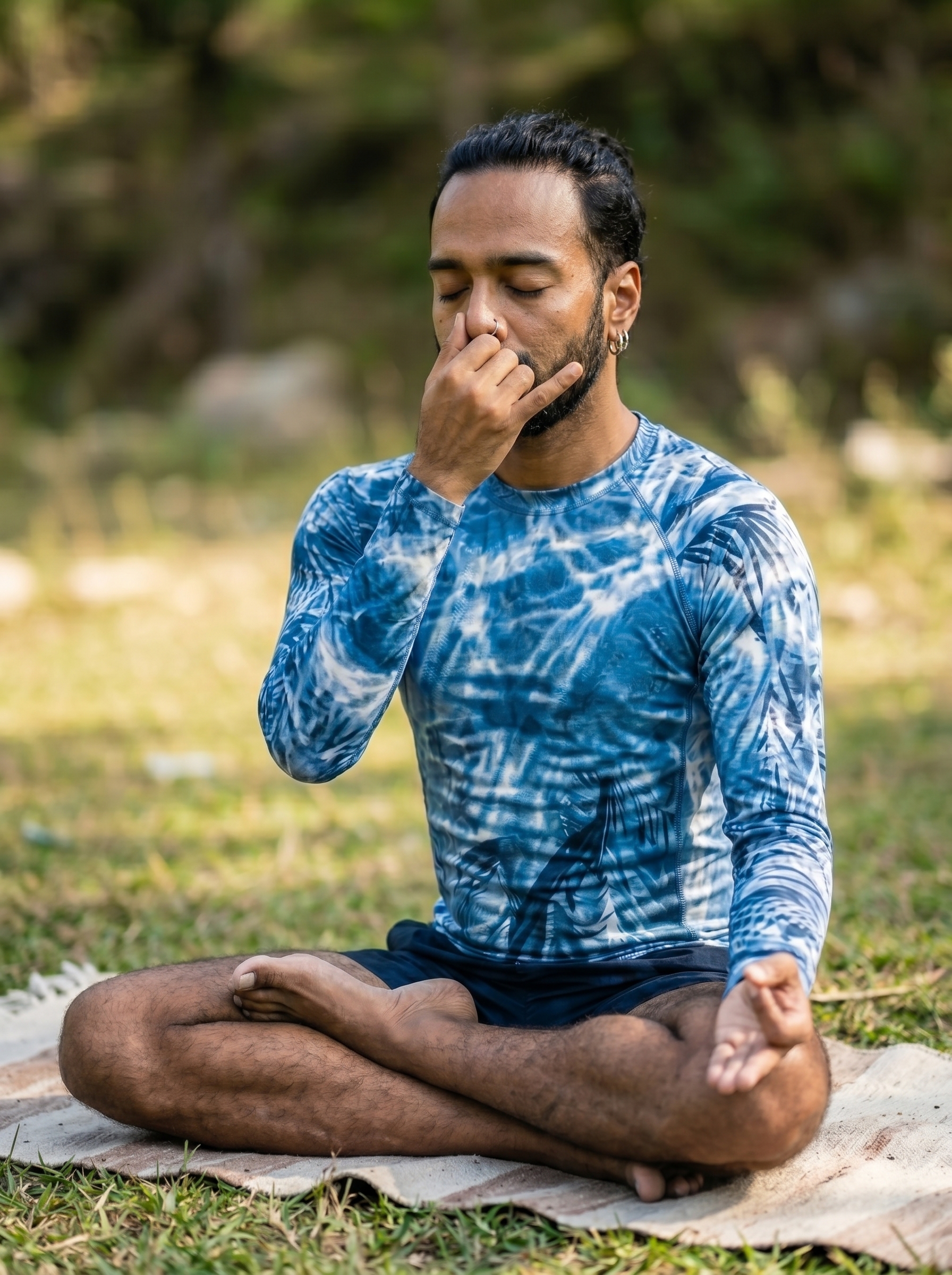
Pranayama is the classical yogic science of breath regulation — one of the eight limbs of the Ashtanga yoga tradition as codified by Patanjali, and one of the oldest documented systems for working with the human nervous system. The word itself carries the whole teaching: prana, the vital life force; ayama, extension and expansion. Together, the practice of extending and mastering the breath.
Pranayama is not breathing exercises in the modern wellness sense. It is not a five-minute morning routine or a technique for productivity. It is a disciplined, graduated practice through which the practitioner develops a direct, conscious relationship with the subtlest instrument they possess — the breath — and through it, the mind.
Practiced correctly, pranayama regulates the autonomic nervous system, deepens concentration, dissolves chronic tension patterns, and creates the interior conditions necessary for meditation, breath-hold, and sustained presence. Its effects are not metaphorical. They are physiological, neurological, and profound.
At Apnosphere, pranayama is taught as it was designed to be taught — as a classical practice, transmitted with precision, adapted to the individual, and never separated from its deeper purpose.